
Catamaran, the family office of Infosys founder Narayana Murthy, is targeting 15 per cent returns on its portfolio investments per annum as it shifts focus from early-stage investments to growth and late-stage bets. This would double the firm's assets under management (AUM) from the current $1 billion to $2 billion over the next five years. "For direct investments, we are focusing on growth-stage investments and very selectively on early stage," Deepak Padaki, president, Catamaran, told Business Standard. "(This is) primarily because the early-stage space in India, in the last three-four years, has completely changed. "There has been a huge influx of capital in the last two years. It has become a very crowded space for early-stage investment," he said.

The agitational programmes include the 'Loktantra Bachao Mashal Shanti March' starting from Red Fort on Tuesday and a series of press conferences in 35 major cities across the country on March 28 and 29.

Forty Indians entered the billionaires' club in the pandemic-stricken 2020 to take the number of those in the coveted list to 177 people, a report said on Tuesday. Mukesh Ambani continued to be the wealthiest Indian with a networth of $83 billion. The head of Reliance Industries witnessed a 24 per cent jump in fortunes and climbed up one spot to be the eighth richest globally, as per the Hurun Global Rich List. Gautam Adani from Gujarat, who has had a spectacular rise in fortunes in the last few years, saw his wealth almost doubling to $32 billion in 2020 and climbed 20 places to be the 48th richest person globally and the second wealthiest Indian.

'Especially if their investment horizon is over two years.'
'As long as economic growth remains steady, creating jobs and generating stable incomes, the rise in home loans should not create problems.' 'If the growth trajectory changes course over the medium term and interest rates rise along with inflation, the expanding trend in home loans may not sustain.'

Investors' wealth tumbled over Rs 5.78 lakh crore in two days of market fall amid a weak trend in global markets after a host of central banks hiked interest rates and gave hawkish commentary. The 30-share BSE Sensex declined 461.22 points or 0.75 per cent to settle at 61,337.81 on Friday. In the previous trade, the BSE benchmark had tanked 878.88 points or 1.40 per cent to settle at 61,799.03.

After three consecutive years of infusing huge funds, foreign portfolio investors retreated from the Indian equity markets in a big way in 2022 with the highest-ever yearly net outflow of nearly Rs 1.21 lakh crore. The huge outflow, which surpasses by a big margin the previous record of Rs 53,000 crore net withdrawal in 2008, came amid aggressive rate hikes by central banks globally but 2023 is expected to be better on positivity about overall macroeconomic trends in India, experts said. Apart from global monetary tightening, volatile crude, rising commodity prices along with Russia and Ukraine conflict led to an exodus of foreign money in 2022.

Education finance is a complex and dynamic sector. There are too many variables -- the course, the calibre of students, the universities, and the job prospects once the course is over, notes Tamal Bandyopadhyay.

Gaurav Mashruwala, renowned financial planner chat with our readers on investment, debt, and spending.

'The long maturity of these funds makes them well-suited for long-term financial goals such as saving for retirement or children's education or marriage.'

Investors who decide to enter medium to long-duration funds should be cognisant of the risk.


Fund mobilisation by companies through equity and debt routes has dropped 20 per cent in 2022 to nearly Rs 11 lakh crore, as exuberance dwindled this year due to expensive credit avenues and volatile markets. The first half of 2023 could continue to remain challenging. The year 2021 was extraordinary for fundraising from the equity and debt routes, while 2022 has seen a slowdown in capital raising owing to elevated volatility provoked by unprecedented inflation globally and the Russia-Ukraine war.

At a time when investors are preferring higher-risk investment products like thematic and small-cap mutual fund (MF) schemes, some fund houses are exploring the possibility of going further down the market-capitalisation (m-cap) ladder to unearth newer investment opportunities. HDFC MF had filed papers with the capital markets regulator - the Securities and Exchange Board of India (Sebi) - earlier this year for an active micro-cap scheme. Some more fund houses are keen on launching such schemes, say industry observers.

These funds can fetch double-digit returns over the long term which debt tax-saving products can't.

Among the many exits from the billionaire's club in 2022 are D Uday Kumar Reddy of Tanla Solutions (net worth down 66 per cent), Sushil Kanubhai Shah of Metropolis Healthcare (down 65.7 per cent), Vijay Shekhar Sharma of One97 Communications (down 66 per cent), and C K Birla (down 43.4 per cent).

'People try to repay the BIGGEST LOAN first. Actually, you should repay the most expensive loan first.'

With some variations, all regional political formations, whether in power presently or out of it, share some common features: Tight family control of the political apparatus, key members in elected or appointed positions, obvious wealth but not quite known sources of income, and family factionalism, sometimes open and bitter, notes Shreekant Sambrani.
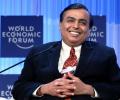
'The top 11 billionaires in India added so much to their wealth during the pandemic that it would have sustained MNREGA for 10 years or the ministry of health for 10 years.'

Formal announcement of venture into new segment on Thursday; group's entry timely, given the demand, say experts

Buying or selling securities based on rumours about expected changes in tax rates or sectoral sops can backfire, advises Sarbajeet K Sen.

During high inflation times, calculate real returns to maximise wealth.

'My wife, family members as well as members of the workers will be trustees.' 'The trust will take all decisions -- no family member can individually take any decision.'
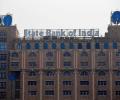
State Bank of India (SBI) on Tuesday announced the launch of its first "state-of-the-art" dedicated branch for start-ups in the country here, to facilitate and support them. The branch launched by SBI chairman Dinesh Khara is located in Koramangala, which alongside neighbouring HSR Layout and Indiranagar are the biggest start-up hubs in the city. "...overall we are in a position to provide end-to-end services to start-ups, with that in mind this particular start-up branch is the first start-up branch we are starting, from the capital city of start-ups- Bengaluru.

India should emerge as the 'human resource capital' of the world as China has become a global 'manufacturing factory'.

Mr Modi, it came across, did not want to be seen as favouring any one business group.

The UK on Thursday (local time) closed Tier 1 Investor visa route to all new applicants from all nationalities with immediate effect over security concerns. Home Office took the action as the route failed to deliver for the UK people and gave opportunities for corrupt elites to access the UK. UK Home Secretary, Priti Patel took decisive action with immediate effect.

Family offices are increasingly looking to invest directly in start-ups rather than through investment in venture capital (VC) firms. The shift is happening because of multiple reasons. Next-generation scions of wealthy families are conversant with how the start-up world works after they have spent time in Silicon Valley; start-up investment is rising to 10-15 per cent of family offices' portfolios from single digits; and they do not want to share gains of investment with VC firms. "While earlier they would prefer to invest in this asset class via venture capital (VC) funds as LPs (limited partners), now they are making direct investment in start-ups.

The lowly kadu is promoted to an awesome pumpkin soup.

Avoid discontinuing your SIPs. Persist for at least 7-10 years.

Nikunj Saraf, Vice President Choice Wealth, answers your queries.

The temptation to rehash Manmohanomics is not going to deliver the achche-din that Narendra Modi has promised, warns Sriram Balasubramanian.

In the year 2020 to date, these funds deployed capital worth a record $14.8 billion in India, which is nearly three times more than what they have put in China - $4.5 billion.

Mr Adani has a fight on his hands. It is not a fight to the death, asserts T N Ninan.

Moitra brought two birthday caps in the House to press her argument that the businessman being most talked about had "topi-pehnau-ed" the government.
Rarely has a cash explosion of $867 billioni ever hit the markets at one time. Yet that's exactly what's happening right now.
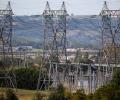
In all likelihood, the next conventional Chinese attack on India would be preceded by a massive cyber attack designed to cripple Indian networks and interfere with our disaster-relief programmes.

Reliance Industries, construction major L&T and IRB Infrastructure are some of the top companies that have used an infrastructure investment trust structure to reduce part of their debt and generate returns for their investors. Earlier this month, IRB Infrastructure InvIT was listed on the National Stock Exchange, giving its investors an option to exit by selling their units. The listing came within months of the Securities and Exchange Board of India's (Sebi's) guidelines for conversion of private unlisted InvITs into listed ones were issued.

The Securities and Exchange Board of India (Sebi) has proposed stricter disclosure norms for certain foreign portfolio investors (FPIs) to bring in more transparency and trust against the backdrop of the Adani-Hindenburg Research saga. Under the new norms, FPIs with an exposure of more than 50 per cent to a single group or with assets of over Rs 25,000 crore will be tagged as 'high risk' and will be required to provide additional information such as full identification of their ownership, economic interests, and control rights. A failure to provide these disclosures will lead to invalidation of the FPI registration.

'Set aside around six months' monthly expenses for emergencies.' 'Keep this money in safe and liquid options, such as liquid funds and fixed deposits.'
